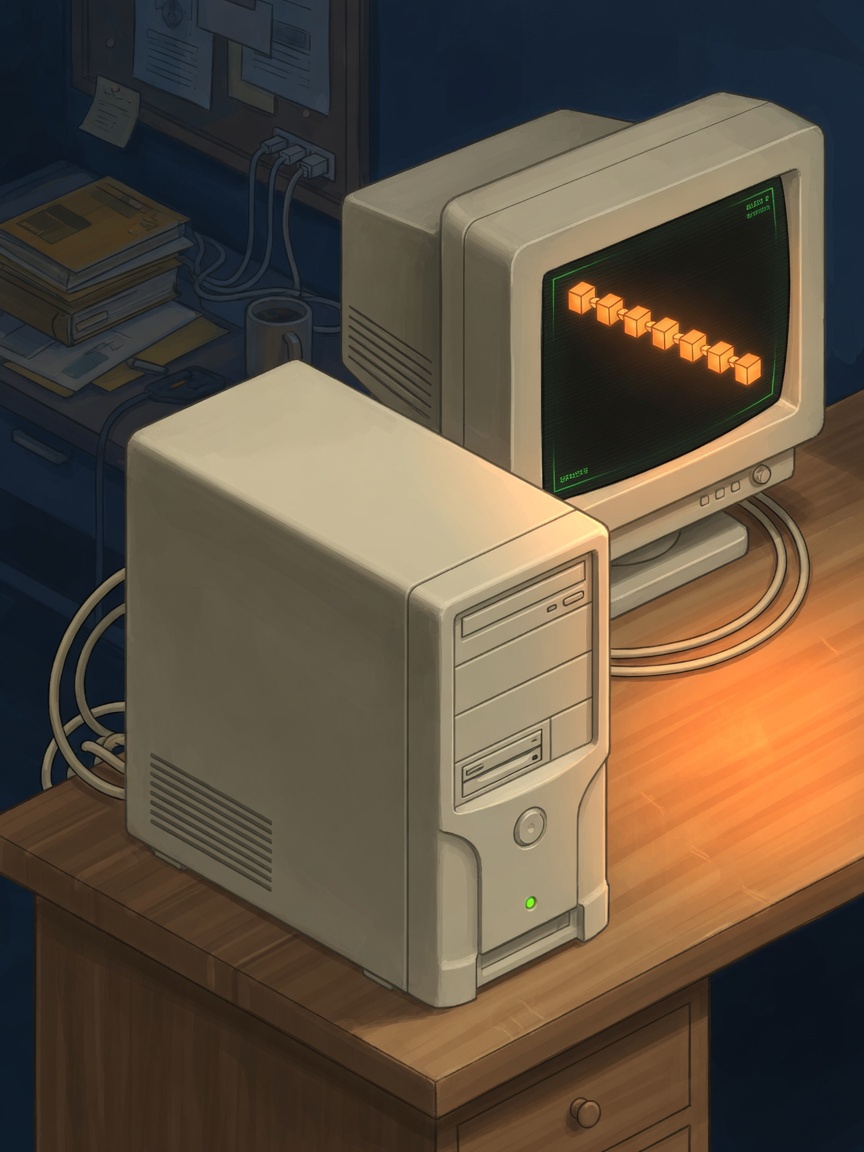
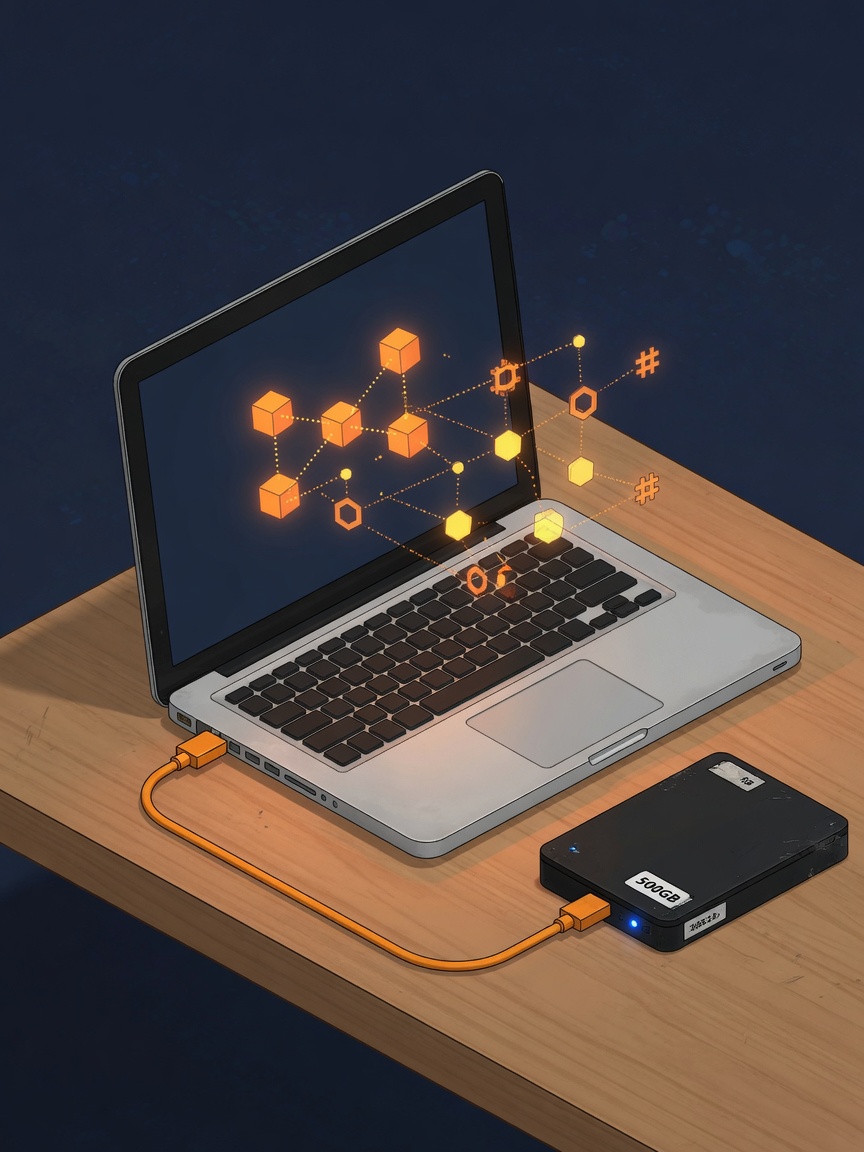
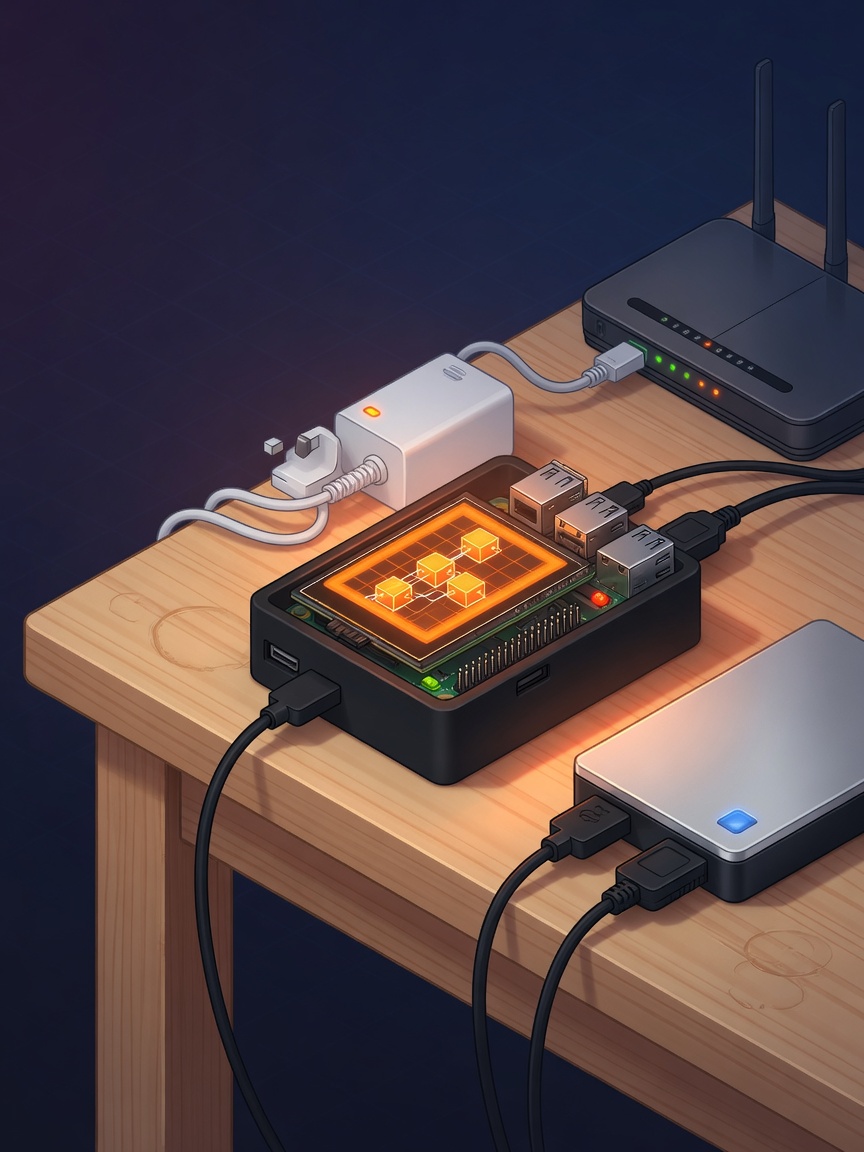
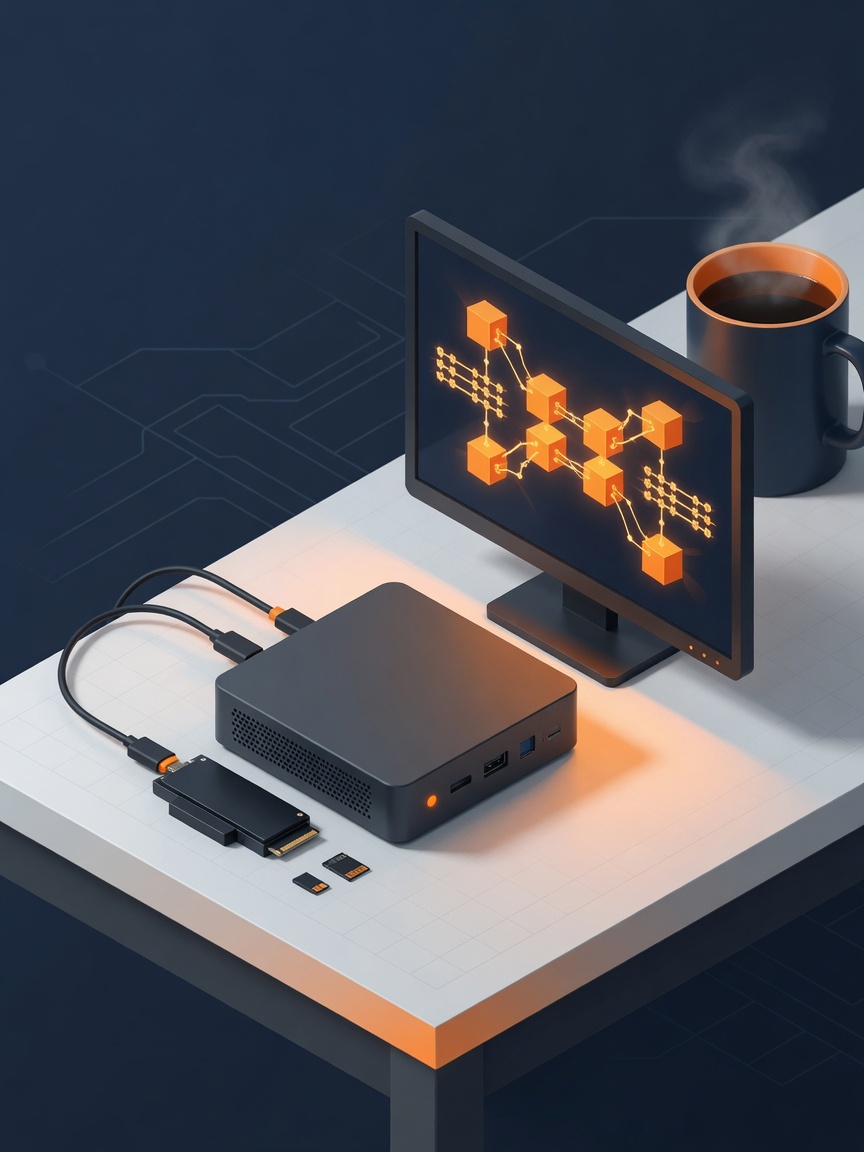
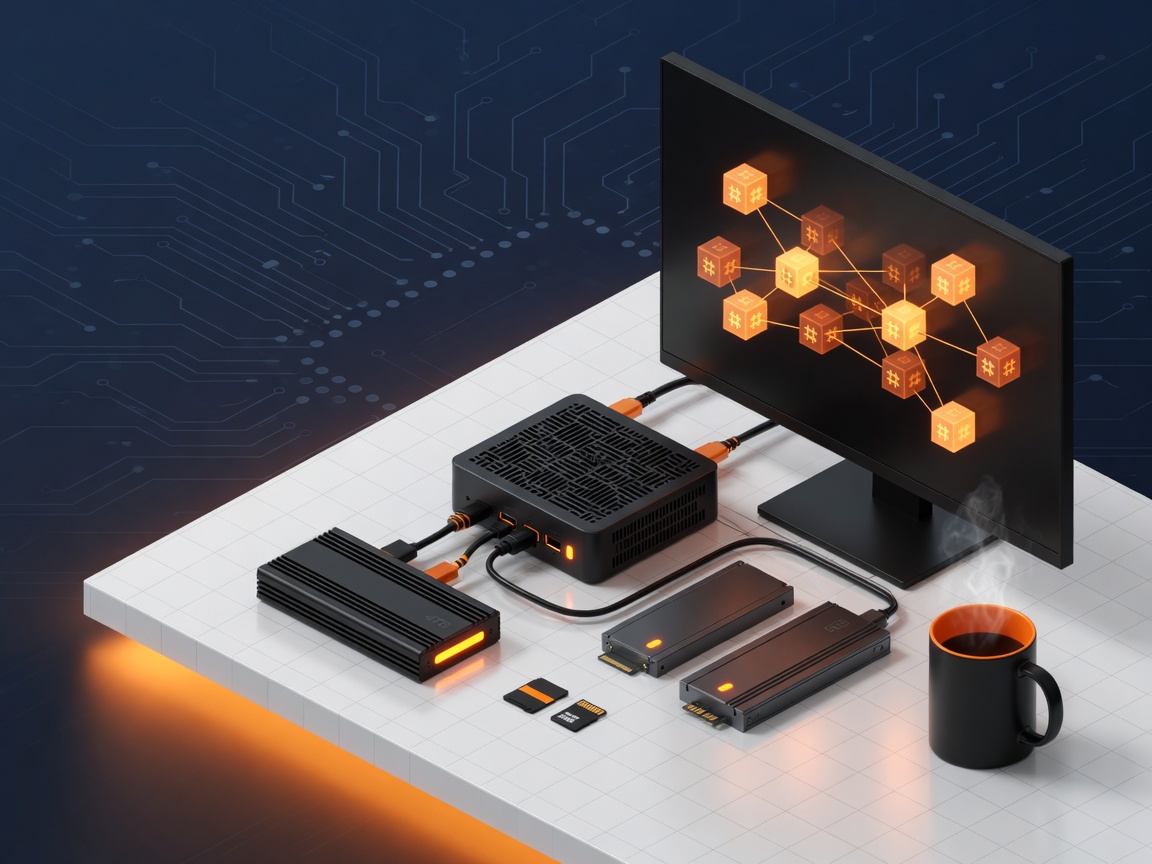
2009–2011 spare-PC era: Early nodes reused desktops you already owned — kit is ~$50 marginal (cables/wear), not a new PC. Setup totals ~$100–110 because the model still prices a small data drive. Dedicated kit pricing starts in 2012 as the chain left the MB scale.
Storage price history: Bulk HDD $/TB fell from ~$110 (2009) to ~$10 (2026). Consumer SSD/NVMe was ~$50–70/TB through 2024–2025, then spiked to ~$145/TB in 2026. Auto mode prices HDD through 2020, SSD from 2021+ (usual archival recommendation). You always buy whole drive SKUs: min 0.5 TB → 1 TB (2015+) → 2 TB from 2019 (future-proofing before need alone forces it). USB enclosure is charged only for external-drive eras (2012–2023), not spare-PC internals or modern NVMe HAT kits.
2020→2021 step: Auto storage flips HDD→SSD while Pi-era kits were scalped — modeled one-time setup roughly doubles. That is policy (recommended media + kit market), not a sudden chain-size shock.
Efficient hardware: Raspberry Pi 4/5 runs Bitcoin Core with 4–8 GB RAM, replacing $500+ desktops from 2009–2012. Hero eras match the cost model: spare PC → laptop → NUC → Pi+HDD → Pi+SSD → N100/NVMe.
Bandwidth abundance: Unlimited home internet became standard; node traffic is a tiny fraction of monthly caps after initial sync.
OpEx assumptions (USA): Internet plan cost follows USTelecom Broadband Pricing Index anchors — ~$38/mo entry broadband (2009), ~$66 (2015 popular tier), ~$52 (2020), ~$70 (2025–26 BPI-Speed 100–940 Mbps). Default attributes 15% of the plan to the node. Electricity uses EIA residential averages: 11.5¢/kWh (2009) → ~18.8¢/kWh (2026, Apr EIA). Default watts are era-aware (always-on desktop ~40–55 W → NUC ~25 W → Pi ~12 W → modern mini PC ~15 W); override with the slider.
Software optimization: Compact blocks, assumevalid, and better I/O let Core run on modest hardware while still validating the full chain.
The 2026 NAND spike: Consumer 2 TB NVMe jumped from ~$120–150 (2025 lows) to ~$290+ in 2026 as AI datacenters absorbed NAND supply. The same squeeze hit DRAM: Pi 5 8GB went from $80 to $175, and 16 GB N100 mini PCs from ~$160 to ~$250. A 2026 archival build is ~$530 — roughly double 2024.
The catch: Absolute chain size still grows ~80–85 GB/year (2024–2026; Bitcoin Core's own disk guideline rose 810 → 897 GiB from Sep 2025 to Sep 2026). Archival nodes always need more disk — historically $/TB fell faster than the chain grew; the 2026 spike is a temporary reversal.
Pruned vs archival storage: Pruned nodes validate the full chain but discard old block files. Steady-state disk grew with the chainstate (UTXO set): <1 GB (2010–12), ~2–3 GB (2015), ~5 GB (2017–18), ~8–10 GB (2020–22), ~15–20 GB today (2025–26, ~12.5 GB chainstate + headroom) — still far below the ~940 GB archival minimum. First sync still downloads the full chain (~753 GB bandwidth today) either way.
Pruned cost model: Pruned mode assumes Core on a laptop/desktop you already own. One-time setup is $0 by default — you use existing free disk space (~18 GB today), not a new Pi or USB drive. The real pruned cost is annual OpEx (electricity + internet share). Toggle “USB/SD reference” in Assumptions if your disk is full and you’d buy a small stick.
2031–2040 (projected): Hardware class stays similar (efficient mini PC / ARM, 16 GB RAM) — bigger change is buying 4–8 TB NVMe instead of 2–4 TB. Baseline assumes NAND supply recovers and $/TB resumes deflation.